
Imposter AI: Party Game
Tomi ArakakiWord
4.49.00 Reviews
- Version
- 3.6.0
- Installs
- 100.00K
- Age Rating
- Everyone
Screenshots
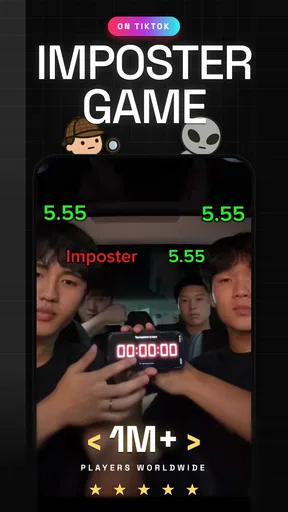


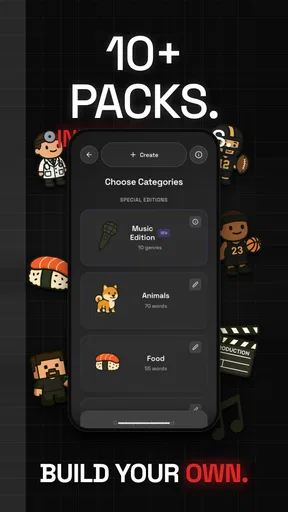
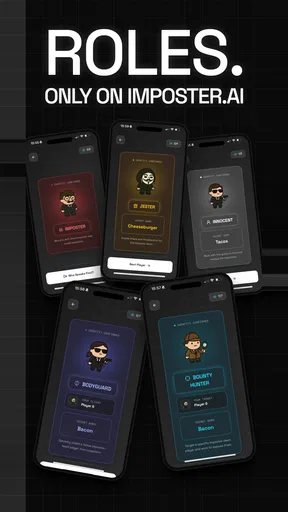
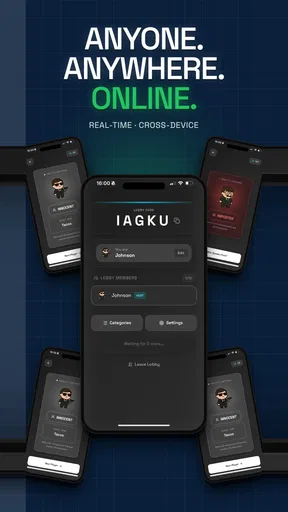
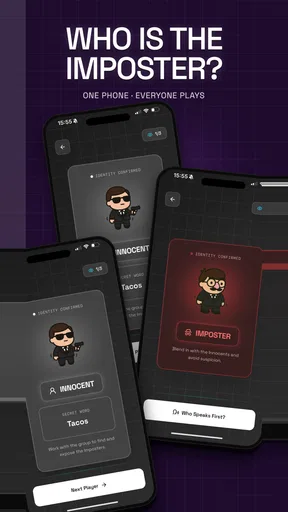
Our Review of Imposter AI: Party Game
 Analysis by Appyee
I found Imposter AI: Party Game most interesting when I stopped treating it as a quick word puzzle and started looking at it as a social activity. The basic idea is easy to explain: players bluff, vote, and try to identify the spy while an AI opponent can take part. That combination gives the game a different feel from a traditional solo word app, because the real challenge is not only knowing words. It is noticing hesitation, interpreting votes, and deciding how much confidence to show.
I reviewed it as a free word game from Tomi Arakaki, and my overall impression is that its strongest quality is how quickly it can turn a spare moment into a group conversation. The game is rated for Everyone, works on devices running Android 6.0 or later, and has reached over 100 thousand installs. Those details make it easy to consider for a broad audience, but they do not automatically mean every player will find the experience equally comfortable. In this review, I focus especially on readability, navigation, physical and sensory demands, and the situations in which the game is easiest or hardest to enjoy.
How the game feels to read, understand, and navigate
The central loop is approachable. You receive a prompt or role, take part in the discussion, and then vote on who seems suspicious. That structure gives a new player an immediate sense of purpose. I did not need a long explanation of complicated controls to understand what I was meant to do. For a party game, that low entry barrier matters because people often join halfway through a gathering and do not want to study a manual before playing.
The word-game foundation also helps with orientation. Instead of learning a large map, a character build, or a complicated inventory, players concentrate on language and social reasoning. The important information is the kind that can be discussed aloud: what someone said, how their answer fits the topic, and whether their behavior seems convincing. That makes the experience more transparent than many competitive mobile games, where a player may need to remember several systems at once.
In my experience, the best way to introduce it is to explain the objective before the first round and then let everyone learn by playing. I would not begin with a crowded group of people who are all asking what to tap next. A short practice round, with no pressure to win, gives players time to understand the rhythm of reading the prompt, forming an answer, listening to others, and voting. This is also useful for anyone who needs extra time to process written instructions.
The navigation is most effective when the group treats each round as a sequence rather than a race. I recommend deciding in advance who will read the information aloud, who will keep the discussion moving, and when the group will vote. That small routine reduces confusion, especially when several people are sharing one device or when online conversation is happening at the same time. It also prevents the fastest reader or loudest speaker from controlling the whole session.
The AI element changes the learning curve in a useful way. A computer-controlled participant can make the game feel less dependent on finding a full group, while also giving new players something to observe. I found that watching how an AI participant fits into the discussion can help explain the kind of reasoning the game expects. At the same time, players should not assume that an AI opponent will behave exactly like a human friend. The social clues are more interesting when the group treats the computer as one part of the game rather than as a perfect imitation of a person.
Text-heavy party games can create a quiet barrier for people who read slowly, have dyslexia, or are playing in a language they do not use every day. The game’s simple concept helps, but it does not remove that issue. I would make the first round slower, read key prompts aloud, and avoid interrupting someone who needs a moment to form an answer. That is not merely polite; it produces better deduction because players are responding to the same information instead of rushing through it.
One practical tip is to separate reading from discussion. If everyone speaks while a player is still trying to understand the prompt, the social deduction becomes a test of processing speed rather than a test of bluffing. Giving the reader a quiet moment first makes the game fairer and helps people who are easily distracted by overlapping voices. This is one of the simplest ways to make the experience more inclusive without changing the rules.
Why the word format helps some players
Compared with action games, this is a calmer form of competition. There is no need to aim, steer, or react to an opponent moving across a screen. The main skills are reading, speaking, listening, remembering what others said, and making a judgment. For players who prefer mental competition over fast reflexes, that is a genuine strength.
The format also gives people several ways to contribute. A confident speaker can make a persuasive argument, while a quieter player can pay attention to contradictions and vote carefully. Someone who does not enjoy improvising can still participate by observing patterns. I like that the game does not require every player to be entertaining. Good listening can be just as valuable as a clever bluff.
There is a trade-off, though. The game depends heavily on communication, so a player who cannot comfortably read the text, hear the discussion, speak clearly, or follow rapid exchanges may be placed at a disadvantage. The word category is accessible in a broad sense, but the social layer adds demands that a normal crossword or solo word puzzle would not have.
Motor, sensory, and situational access in real play
From a motor perspective, the game should appeal more to people who find touch controls difficult in fast-paced titles. The essential actions are deliberate: reading, choosing, voting, and taking part in a conversation. I did not approach it as a game that rewards rapid tapping. That makes it a better candidate for relaxed play than a reflex-based arcade game, although any player who struggles with precise touch selection may still need a larger, steadier setup.
A phone held in one hand can become tiring during a longer session, particularly if several people are trying to see the same screen. I prefer placing the device on a table or stand and having one person handle the shared display while everyone contributes verbally. This arrangement reduces repeated hand movement and makes the text easier for the group to view. It also avoids the awkwardness of passing a phone around after every turn.
For players with limited hand strength or involuntary movements, the social format offers a possible workaround: one trusted person can operate the device while the player gives their answer or vote aloud. That depends on the group being comfortable with the arrangement, and it may not work equally well for private information. Still, it is a useful option because the game’s enjoyment comes mainly from deduction and conversation rather than from physically manipulating the screen.
Sensory conditions deserve more attention than the store summary suggests. A party can be noisy, brightly lit, and full of interruptions. Someone with auditory sensitivity may find overlapping voices more difficult than the game itself. Someone with attention difficulties may lose track when players talk over one another or when the phone is passed repeatedly. I get a better experience by keeping the room relatively quiet, asking players to speak one at a time, and pausing before the vote.
The AI and online elements can help in different circumstances. Online play may be more practical than an in-person gathering for friends who live apart, while AI participation can make the game feel less dependent on having a complete local group. However, online conversation can introduce its own problems: audio quality, delayed replies, unfamiliar voices, and different communication habits. A player who relies on facial expressions or lip-reading may find remote discussion less informative than sitting with friends in the same room.
A realistic example would be a family waiting for food at a restaurant. One person can place the phone where everyone sees it, another reads the prompt aloud, and the group takes turns speaking before voting. That setup works well because the game fills a short social gap without demanding a full evening. It becomes less suitable if the restaurant is loud, the table is crowded, or people are uncomfortable sharing one screen. In that case, a quiet solo word puzzle would probably be the kinder choice.
Another good use is a remote break with friends who want interaction but do not want a demanding multiplayer game. The AI can help keep the session from feeling empty, and the word-based format gives everyone a reason to listen. I would still establish a simple speaking order in a voice call. Without one, the most assertive players can dominate, and the game becomes less about deduction and more about who can interrupt first.
There is also a useful classroom or club scenario, provided the organizer keeps the activity informal and suitable for the group. A facilitator could use one round to discuss how people evaluate evidence, how quickly they form opinions, and how persuasive language affects voting. The important limitation is that the game should not be used to pressure a student into speaking publicly. Watching, voting when comfortable, or contributing through a support person should remain valid forms of participation.
Where the experience still creates friction
The biggest barrier is not the tapping. It is the dependence on shared language and social timing. Players need to understand the prompt, remember the conversation, notice suspicious details, and communicate their own reasoning. If one person needs more time, the group must be willing to slow down. Without that patience, the game can unintentionally reward speed rather than insight.
People who dislike deception may also want to skip it. Bluffing and accusing are the point, but not everyone enjoys being suspected, even in a friendly setting. I would avoid introducing it to a group that has unresolved tension or to children who may take elimination or accusation personally. The Everyone rating describes the broad content level, but emotional suitability still depends on the players and the way the group handles disagreement.
Language learners face a particularly interesting trade-off. The short word prompts may be useful practice, because players see vocabulary in a social context and have a reason to remember it. Yet bluffing is harder when you are still searching for the right phrasing. A supportive group can allow extra response time or accept simpler answers. A competitive group may turn that language gap into an unfair advantage for fluent speakers.
Players should also consider the cost model before settling into regular use. The game is free to start, but it includes in-app purchases ranging from $4.99 to $59.99 per item. I would treat the free experience as the sensible starting point and decide later whether any purchase improves the way my group plays. For families, it is worth discussing spending expectations before handing the device to younger players. The age rating is Everyone, but purchase decisions still need adult attention.
The current version is 3.6.0, and the game was released on February 1, 2026. I mention this because a new or recently updated party game can feel different as players discover how well its AI and online features fit their habits. I would keep expectations practical: the game’s value comes from the people discussing and voting, not from expecting a deep long-term progression system like a large role-playing game.
Its rating of 4.4 from around 500 ratings suggests that many early players have responded positively, while the nine written reviews indicate a relatively small pool of detailed public commentary. I would read that as a reason to judge the game through a short trial with your own group rather than relying only on the average. A party game can be excellent for one circle of friends and awkward for another, depending on communication styles.
Compared with a conventional crossword, this game is less private and less predictable. A crossword rewards individual concentration and gives players control over the pace. Imposter AI: Party Game adds social uncertainty, which makes it more memorable for a group but less comfortable for someone who wants a quiet mental exercise. Compared with a fast multiplayer action title, it is gentler on reflexes but more demanding socially. Compared with classic hidden-role party games, its AI and online angle make it easier to consider when the group is incomplete or spread across different places, while the word focus keeps the rules approachable.
That comparison points to a clear decision. Choose this game if your group enjoys conversation, playful suspicion, and short rounds where the fun comes from interpreting people. Choose a solo word puzzle if you need adjustable pacing, silence, or minimal social pressure. Choose an action multiplayer game if your friends want constant movement and mechanical challenge. No single format is better; they simply ask different things from the player.
My inclusive verdict after weighing the trade-offs
I would recommend Imposter AI: Party Game to friends who want a lightweight social word game and are willing to make the room work for different communication needs. Its readable concept, non-reflex-based play, AI participation, and online option give it useful flexibility. The strongest accessibility improvement is often organizational rather than technical: read prompts aloud, allow thinking time, keep turns orderly, and let one person operate the device when touch control is uncomfortable.
I would not recommend it as the first choice for someone seeking a fully quiet, solitary, or highly adjustable word experience. It also may not suit players who find bluffing stressful, who struggle with rapid group conversation, or who are joining from a noisy environment. Those are not minor details; they affect the central game loop. A player can understand every rule and still have a poor experience if the social conditions are wrong.
My favorite way to use it is with a small, considerate group that agrees on a slower pace. We read the prompt clearly, give everyone a chance to answer, and treat suspicious votes as part of the game rather than as personal criticism. That approach lets the AI and online features support the session without taking over. It also gives quieter players room to make strong observations instead of forcing them into a performance.
In the end, this is a promising choice for accessible-by-context party play, not a universal solution for every ability or setting. The free entry point makes it easy to test with friends, and the broad Everyone rating keeps the theme approachable. Just remember that the real accessibility of a social deduction game comes from both the app and the people using it. If your group is patient, clear, and willing to adapt the pace, this game’s best feature is the conversation it creates. If not, a calmer solo word game will probably serve you better.
Verdict
Strengths of Imposter AI: Party Game
- Quick rounds make it easy to play during short breaks.
- Supports social deduction without requiring complex rules.
- AI opponents keep matches available when friends are offline.
- Different roles can make each round feel unpredictable.
- Simple controls are accessible for most players.
Limitations of Imposter AI: Party Game
- AI behavior may become predictable after repeated matches.
- Some rounds can feel unfair when clues are too vague.
- Replay value may drop if the role variety is limited.
- Ads can interrupt the flow, depending on the version.
- The experience is more enjoyable with a larger group.
Similar Picks in This Category
View All
Word Search - Word Puzzle Game
Bluetile4.8

Word Search Quest - Puzzles
Blackout Lab4.8

CodyCross: Crossword Puzzles
Fanatee, Inc.4.7

Words of Wonders: Crossword
Fugo Games4.9

Wordscapes: Word puzzle game
PeopleFun4.7

Word Search Explorer
PlaySimple Games4.9
Frequently Asked Questions
What is Imposter AI: Party Game, and how is it played?
Imposter AI: Party Game is a social deduction game built around identifying the hidden imposter among a group of players. Participants receive prompts, clues, or objectives and must pay attention to suspicious answers and behavior while trying not to reveal their own role. The main appeal comes from discussion, bluffing, quick decisions, and discovering which player is secretly working against the group.
Can I play Imposter AI: Party Game with friends, or is it suitable for solo play?
The game is primarily designed for group play, so it is best enjoyed with friends, family, or other players who can actively discuss clues and accuse one another. Depending on the available version and modes, some features may support playing with online participants or computer-controlled opponents, but the social experience is generally strongest when several real people are involved. Check the current store description for supported player options.
Does Imposter AI: Party Game require an internet connection?
An internet connection may be required for downloading the game, receiving updates, displaying advertisements, accessing online multiplayer, or using certain AI-powered features. Some party games offer limited offline functionality, but this can vary by device and game mode. Before starting a session, it is worth checking whether your preferred mode works offline, especially if you plan to play while traveling or in an area with unreliable connectivity.
Is Imposter AI: Party Game free to download, and does it include ads or in-app purchases?
The game may be available as a free download, but free access can include advertising, optional purchases, or limitations on particular content and features. These details can change with updates, regional availability, and platform policies. Review the Google Play or App Store listing before installing, and if children will be playing, consider enabling purchase restrictions and checking whether advertisements are appropriate for the intended audience.
Is Imposter AI: Party Game appropriate for children and safe to play with others?
The game can be entertaining for family groups and casual parties, but suitability depends on its chat features, advertising, themes, and the age rating shown in your region. If online interaction is available, players may encounter messages or usernames from strangers, so parental supervision and privacy settings are recommended for younger users. Avoid sharing personal information, and use reporting or blocking tools whenever the game provides them.
Play our best games!


